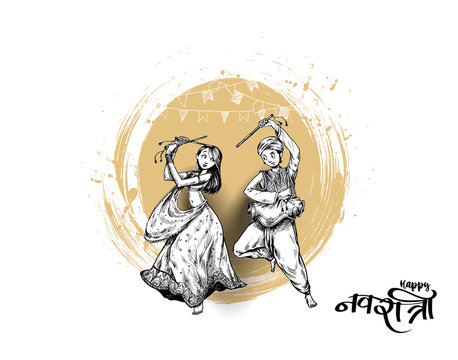
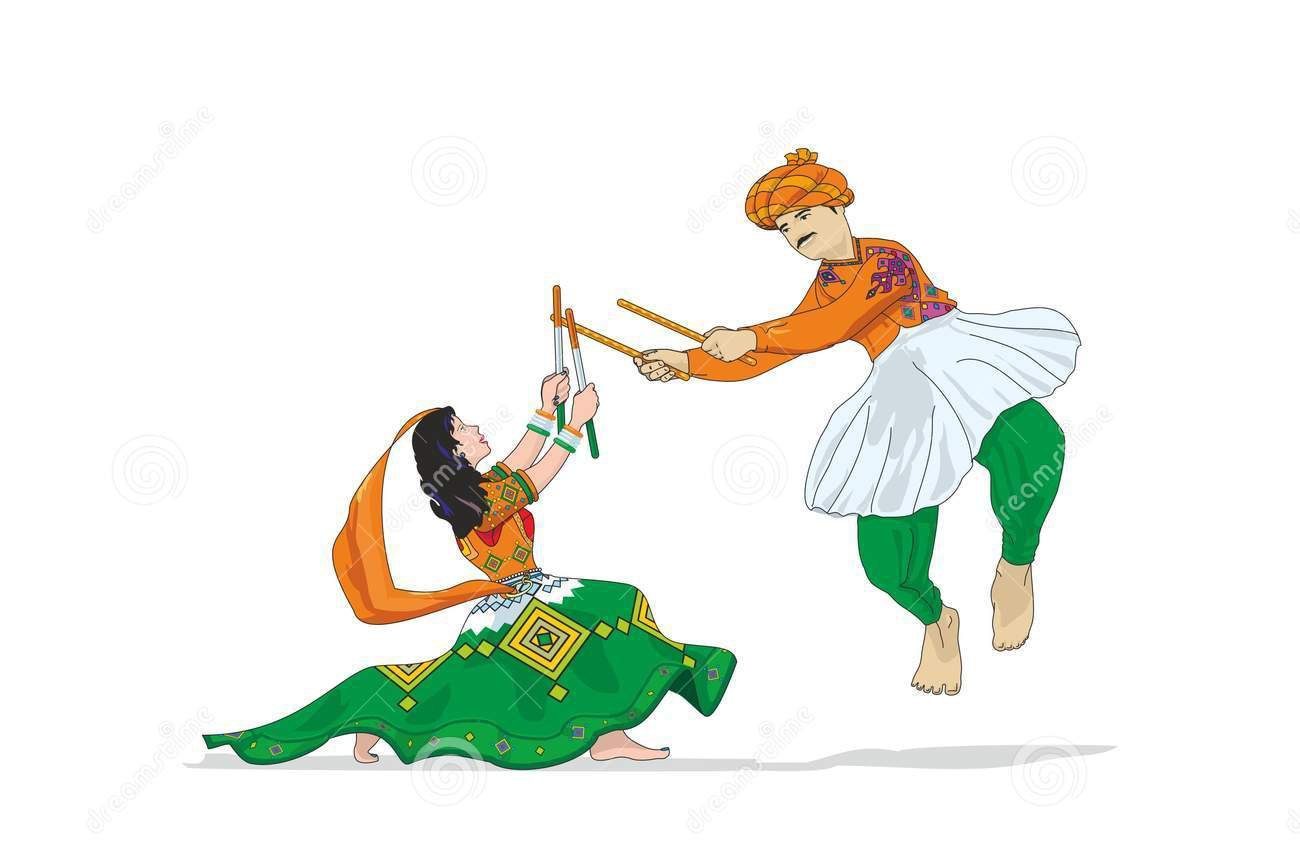
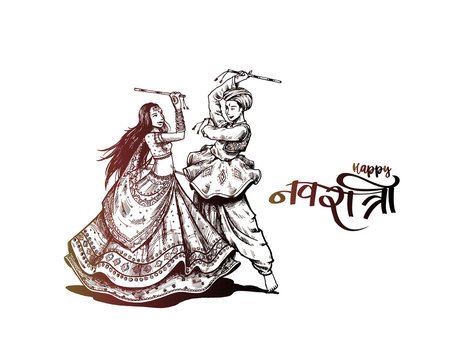
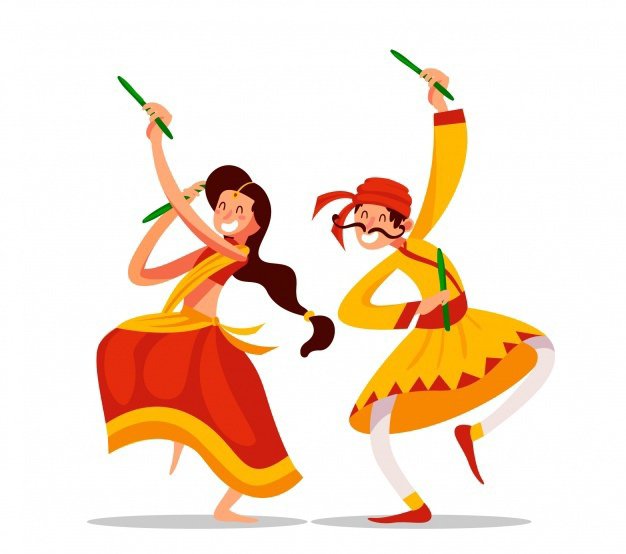
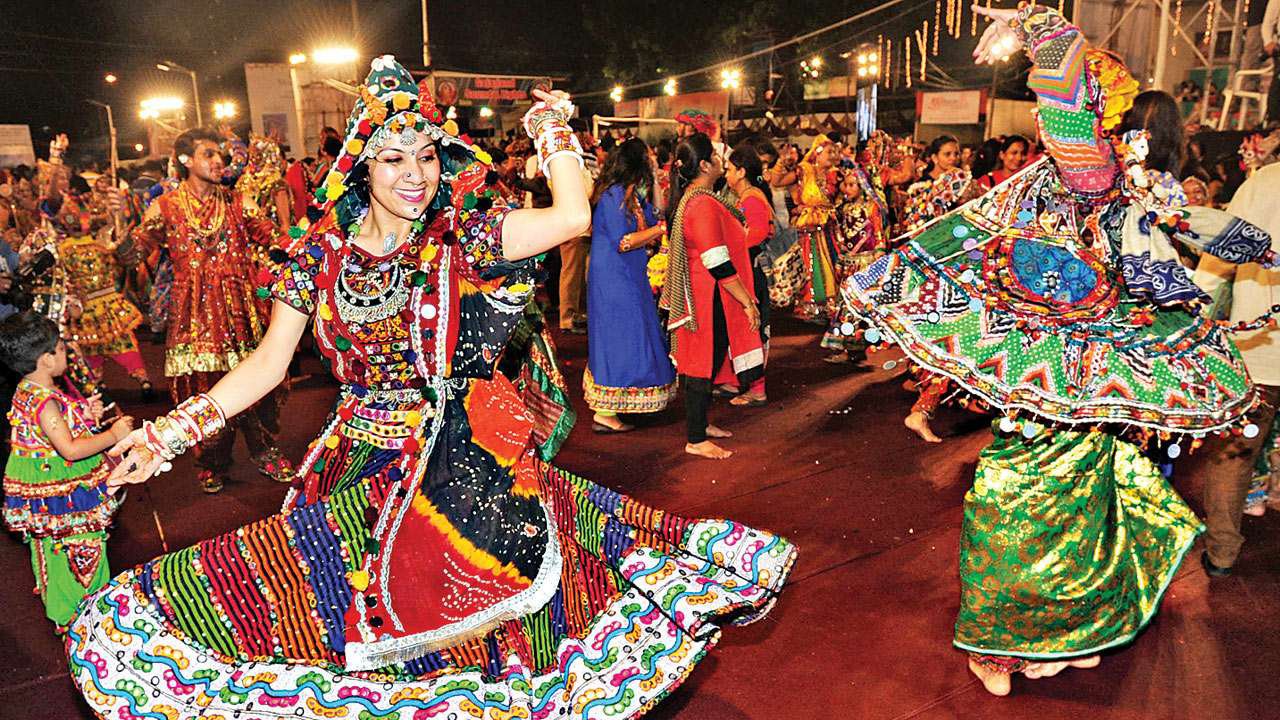
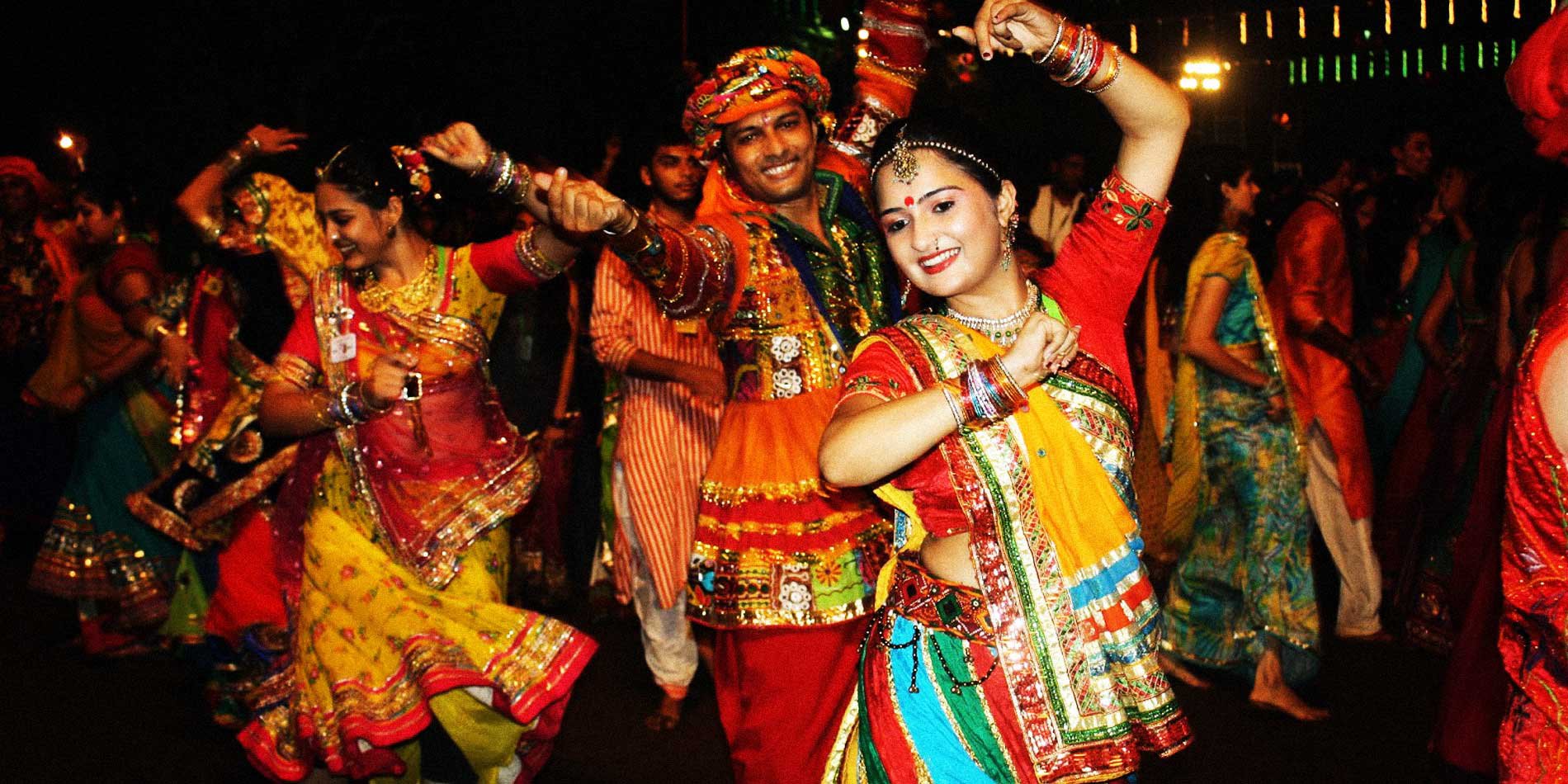
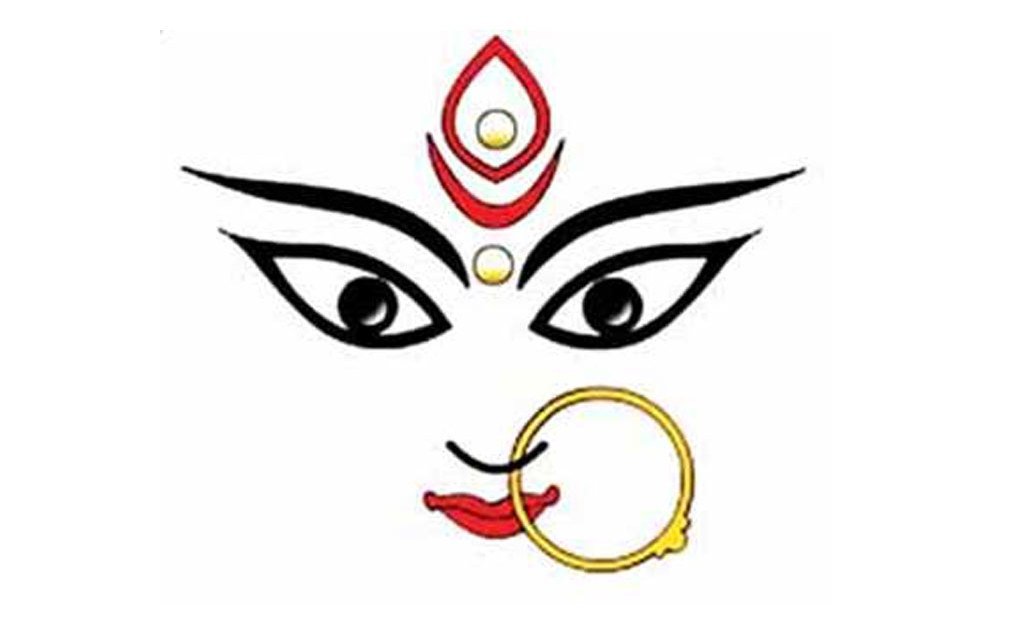
Navratri, (Sanskrit: “Nine Nights”) in full Sharad Navratri, Navratri also spelled Navaratri, in Hinduism, major festival held in honour of the divine feminine. Navratri occurs over 9 days during the month of Ashvin, or Ashvina (in the Gregorian calendar, usually September–October). It often ends with the Dussehra (also called Vijayadashami) celebration on the 10th day. In some parts of India, Dussehra is considered a focal point of the festival, making it effectively span 10 days instead of 9. Additionally, as Navratri depends on the lunar calendar, in some years it may be celebrated for 8 days, with Dussehra on the 9th. There are four similar festivals, also called Navratri, which are held at various stages of the year. However, the early autumn festival, also called Sharad Navratri, is the most significant. It begins on the same day as Durga Puja, a 10-day festival devoted to the victory of the goddess Durga, which is particularly celebrated in certain eastern states.
Day 1 :SHAILAPUTRI
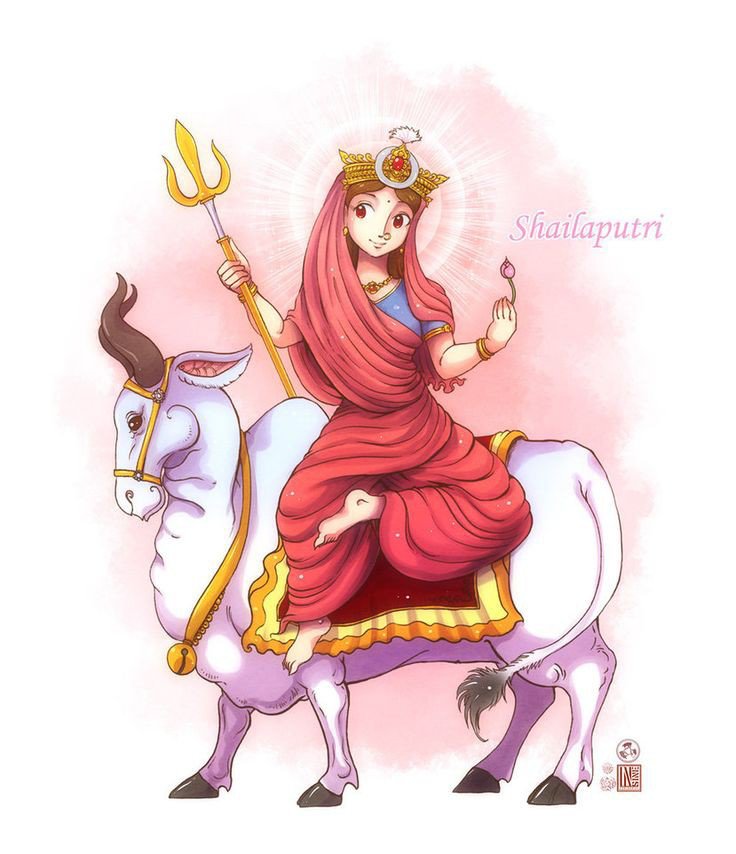
Shailaputri (शैलपुत्री), is the daughter of the Mountain King Himavat, and is a manifestation of the Hindu Mother Goddess, Durga.[1] She is the first Navadurga venerated during the first day of Navratri, and is a reincarnation of Goddess Sati. She is also known as Goddess Parvati.
Day 2 :BRAHMACHARINI
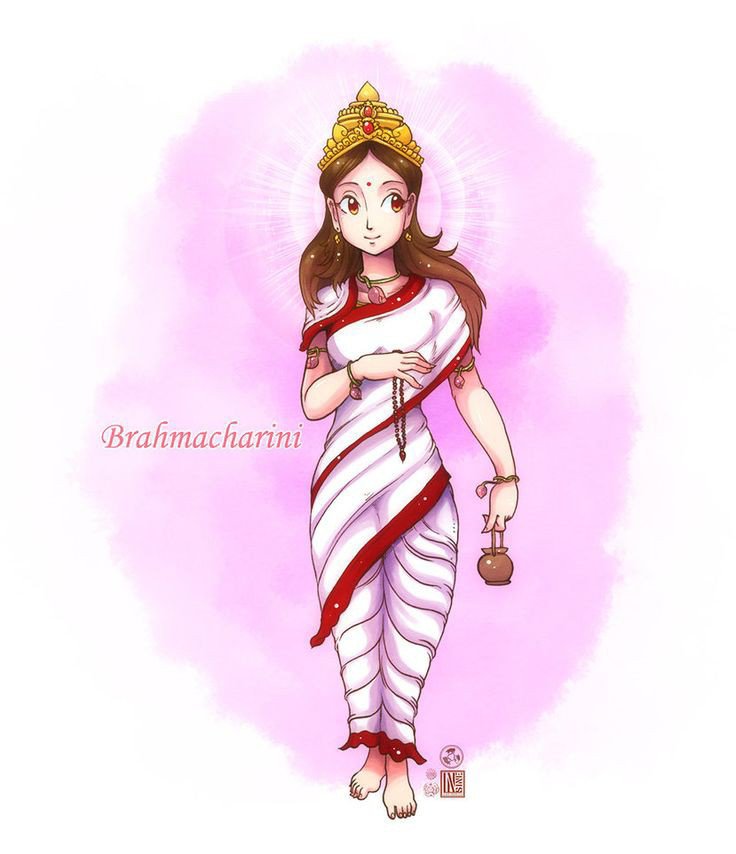
Brahmacharini (Sanskrit: ब्रह्मचारिणी) means a devoted female student who lives in an Ashrama with her Guru along with other students.[1] It is also the name of the second aspect of the goddess Durga (Parvati).[2] The goddess is worshipped on the second day of Navratri (the nine divine nights of Navadurga). The goddess Brahmacharini wears white clothes, holds a japa mala in her right hand and Kamandal, a water utensil in her left hand.
Day 3 :CHANDRAKANTA
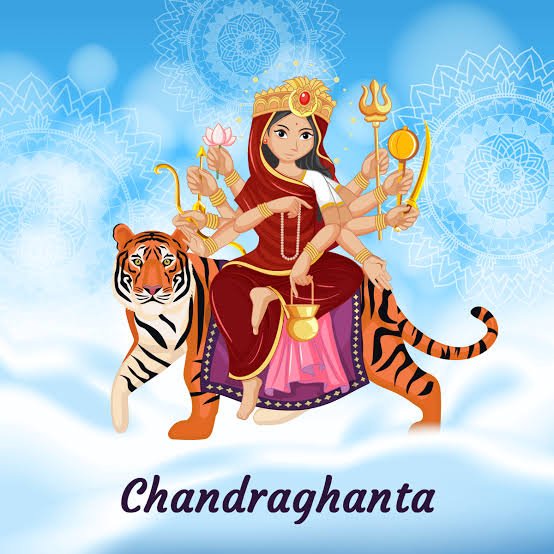
Chandraghanta is the third form of Goddess Parvati (Durga). Her name Chandra-Ghanta, means “one who has a half-moon shaped like a bell. Her third eye is always opened and she is always ready for war against demons”. She is also known as Chandrakhanda, Chandika or Rannchandi. Her worship takes place on the third day of Navaratri (the nine divine nights of Navadurga). She is believed to reward people with her grace, bravery and courage. By her grace all the sins, distresses, physical sufferings, mental tribulations and ghostly hurdles of the devotees are eradicated. It also represent her married form.
Day 4 :KUSHMANDA
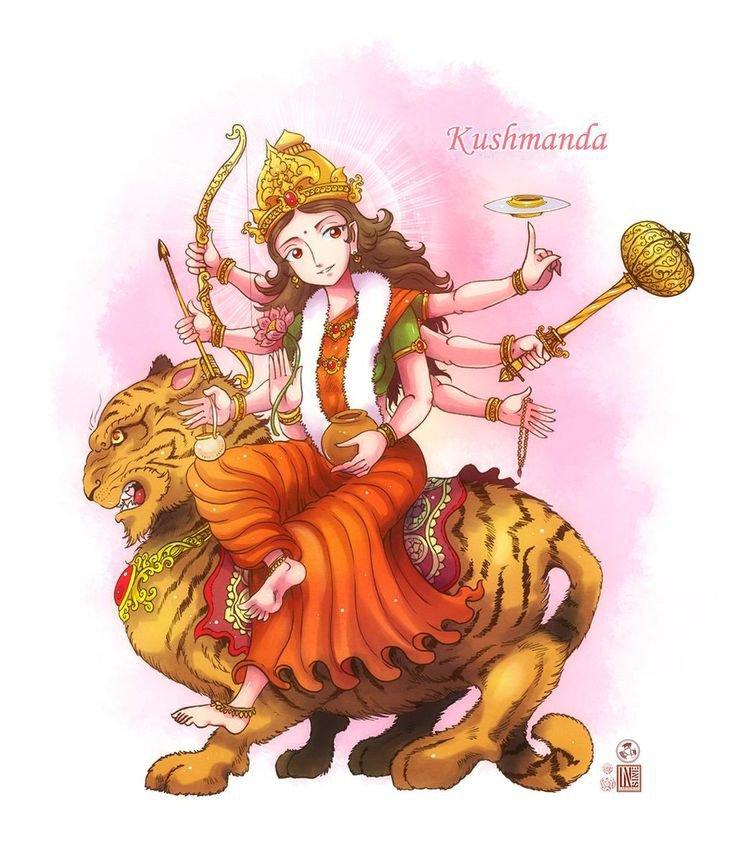
Kushmanda is a Hindu goddess, credited with creating the world with her divine smile. Followers of the Kalikula tradition believe her to be the fourth form of the Hindu goddess Parvati. Her name signals her main role: Ku means “a little”, Ushma means “warmth” or “energy” and Anda means “cosmic egg”.
Day 5 :SKANDAMATA
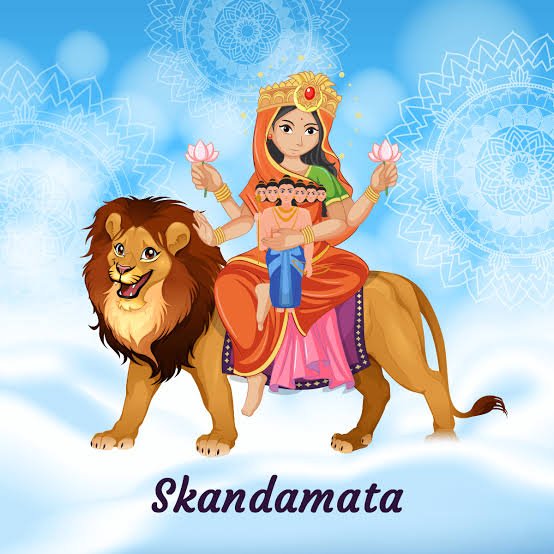
Skandamātā (Sanskrit: स्कन्दमाता) is the fifth form of Hindu Goddess Parvati. Her name comes from Skanda, an alternate name for the war god Kartikeya, and Mātā, meaning mother.[1][2] As one of the Navadurga, the worship of Skandamātā takes place on the fifth day of Navaratri. Her abode is in Vishuddha chakra.
Day 6 : KATYAYANI
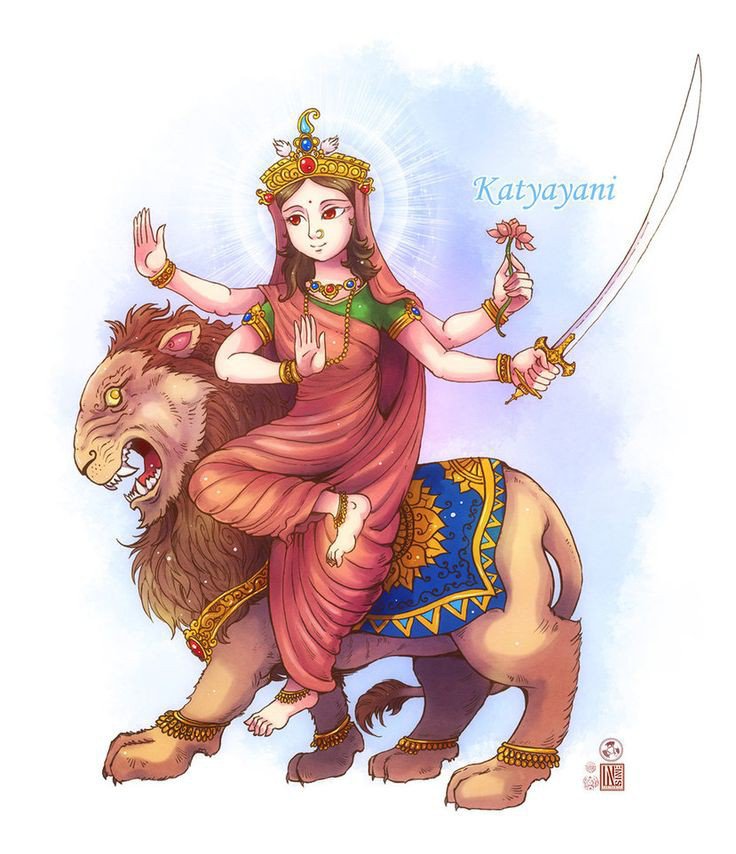
Katyayani (कात्यायनी) is one of the avatars of The Hindu Mother Goddess, Durga. She is seen as the slayer of the tyrannical demon Mahishasura. She is also the sixth form amongst Navadurga or the nine forms of Hindu goddess Durga (Parvati), worshipped during the Navratri celebrations.[1] She may be depicted with four, ten, or eighteen hands. This is the second name given for Goddess Adi Parashakti in Amarakosha, the Sanskrit lexicon (Goddess Parvati names- Uma Katyayani Gauri Kali Haimavati Ishwari). Goddess Katyayani was worshipped by Sita, Radha and Rukmini for a good husband.
Day 7 :KAALRATRI
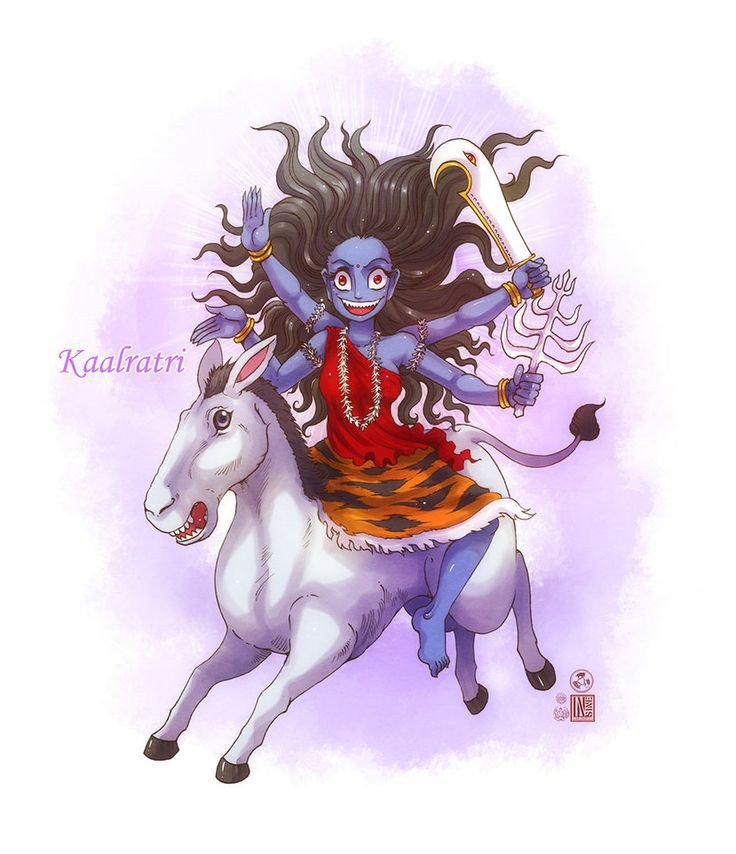
Kalaratri (sometimes spelled Kaalratri) is the seventh of the nine forms of the Goddess Parvati, known as the Navadurga. She is first referenced in the Durga Saptashati, Chapters 81-93 of the Markandeya Purana, the earliest known literature on the Goddess Durga. Kalaratri is widely regarded as one of the many destructive forms of the Mother Goddess,[1] which include Kali, Mahakali, Bhadrakali, Bhairavi, Mrityu, Rudrani, Chamunda, Chandi and Durga.
Day 8 : MAHAGAURI
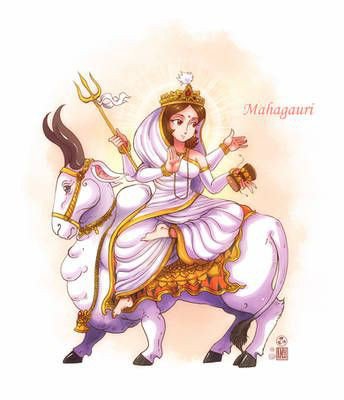
Mahagauri (Sanskrit: महागौरी, IAST: Mahāgaurī) is the eighth avatar of Parvati and amongst the Navadurgas. Mahagauri is worshipped on the eighth day of Navaratri. According to Hinduism, Goddess Mahagauri has the power to fulfill all the desires of her devotees. The one who worships the goddess, gets relief from all the sufferings in life.[1] Mahagauri has four arms. Her right arm is in the pose of allaying fear and right lower hand holds a trident in it. She holds a tambourine in her left upper arm and the lower one is in the form of a blessing.
Day 9 : SIDDHIDAATRI
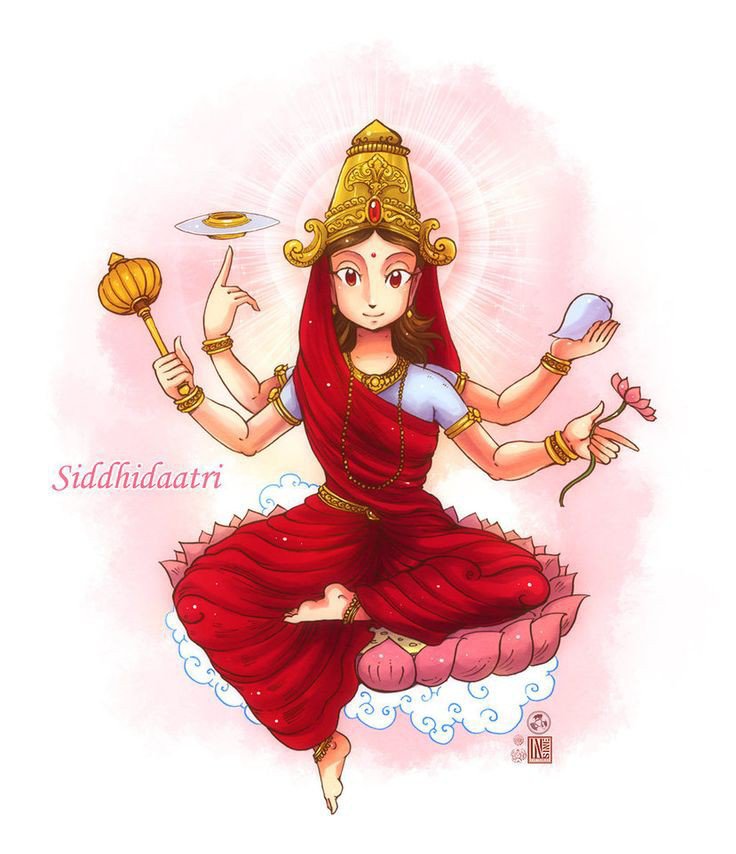
Siddhidhatri is the ninth form of the Goddess Durga or Parvati, the meaning of her name is as follows: Siddhi means supernatural power or meditative ability, and Dhatri means giver or awarder. She is worshipped on the ninth day of Navaratri (nine nights of Navadurga); she fulfills all the divine aspirations and completes the mundane.
 EliteExtant
You must be logged in to post a comment.