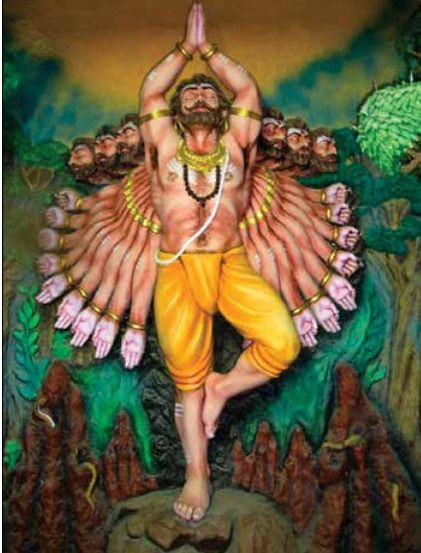
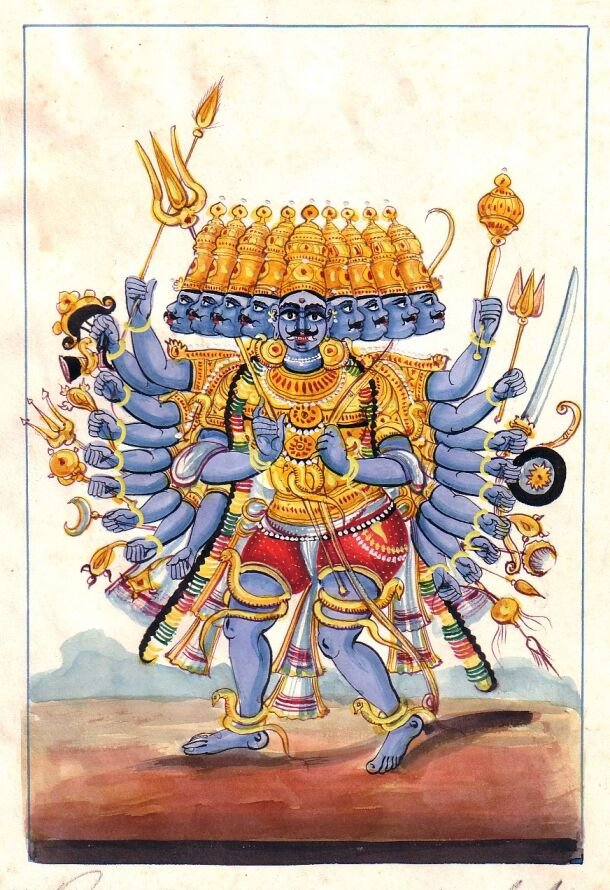
Ravana is the mythical multi-headed demon-king of Lanka in Hindu mythology. With ten heads and twenty arms, Ravana could change into any form he wished. Representing the very essence of evil, he famously fought and ultimately lost a series of epic battles against the hero Rama, seventh avatar of Vishnu.
Family of Ravana
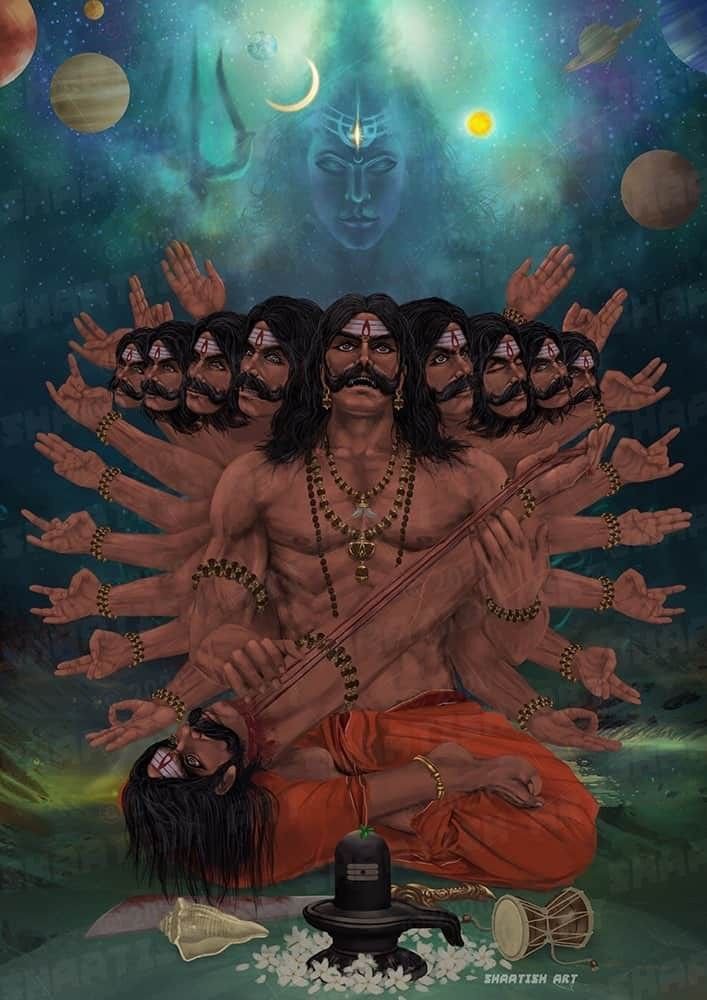
Ravana was a terrible demon (raksasa) who was the king of all demons and of the fortress island of Lanka (modern-day Sri Lanka). His father was Visravas (son of Pulastya, one of the creator Prajapati) and mother Nikasa, also a demon and mother of the cannibal demons, the Pisitasanas. Ravana acquired his throne through foul means when he expelled his half-brother Kubera, god of wealth, from the island. Rava had many sons, notably Aksa, who had three heads, symbolic of the three stages of fever (heat, cold, and sweating), and Indrajit (aka Meghanada), who could make himself invisible.
Personality
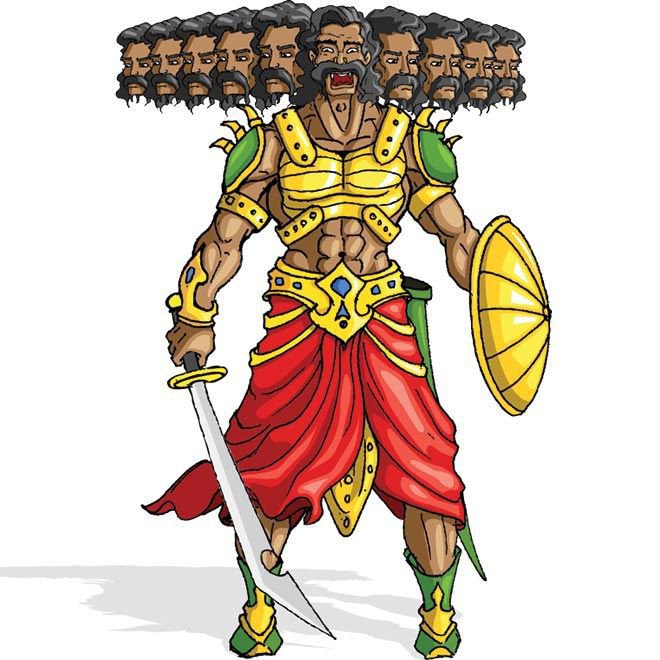
“While Ravana was aggressive and arrogant, he was also an extraordinary scholar. Under his father’s tutelage, he mastered the Vedas, the holy books and also the ways of kshatriyas (warriors). He is even credited with writing a commentary on the Vedas and verses on medicine.
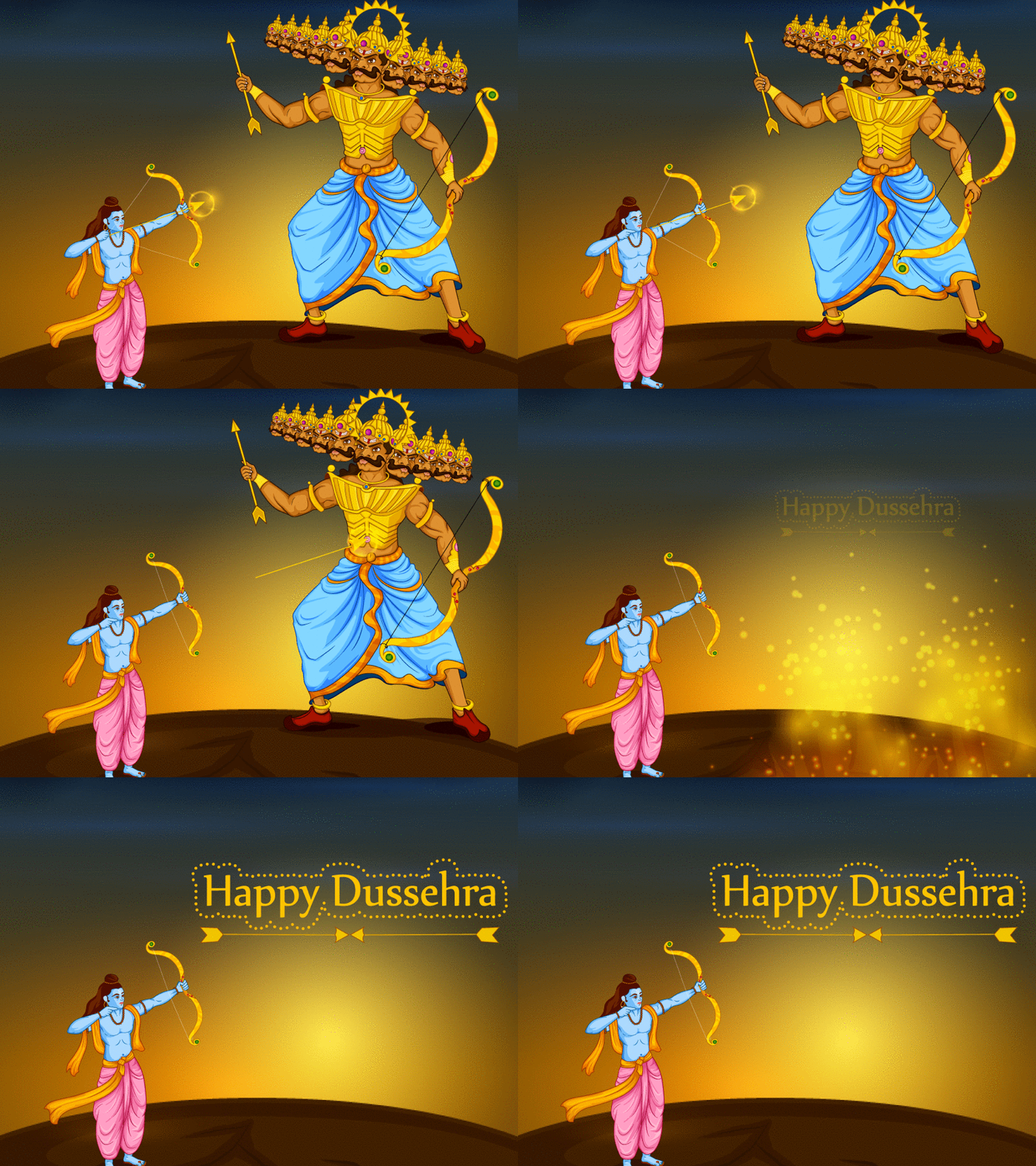
Celebrating Dussehra with Love and Happiness
In Indian culture, Dussehra was traditionally a time for the entire community to meet and mingle with dance and merry making. With time things have changed and many traditions are not followed any more. Many do not know and some do not want to know. But, for those who want to know and revive the tradition, there is not much they need to do. Vijayadashami is a festival of tremendous cultural significance and should be celebrated with gaiety and love without discriminating people. So, this year all should celebrate Dussehra with total involvement, love and joy.
Significance of Vijayadashami in Ramayana
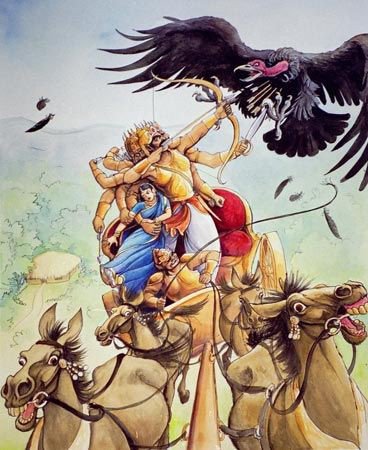
Lord Rama killed Ravana and got victory on this day. Ravana had kidnapped Goddess Sita and fled to Lanka. The entire story is also played on the stage by local artists. The entire scene of execution of Ravana by Lord Ramchandra is enacted in a dramatic folk play, called Ram Lila. The main intention of the play is to show the blissful actions of Rama.
In rural areas the enthusiasm of Ram Lila among folk people could be seen because they make long journey sometimes even starting at night, just to watch the play. The play is usually organized by local Ram Lila committees, is funded by local people and also enacted by them.
It is believed that during 17 the century the King of Mysore ordered celebration of Dussehra on a grand scale. This is the reason why Dussehra is celebrated with great fervour and energy till date in Mysore. In addition to this, in Rajasthan Dussehra fair is held and colourful processions of Lord Rama is taken out which passes through the main market followed by hundreds of people. The biggest fair is held in Kota, Rajasthan every year on this occasion. The victory procession of Lord Rama is welcomed by people with cheer.
Facts about ravana
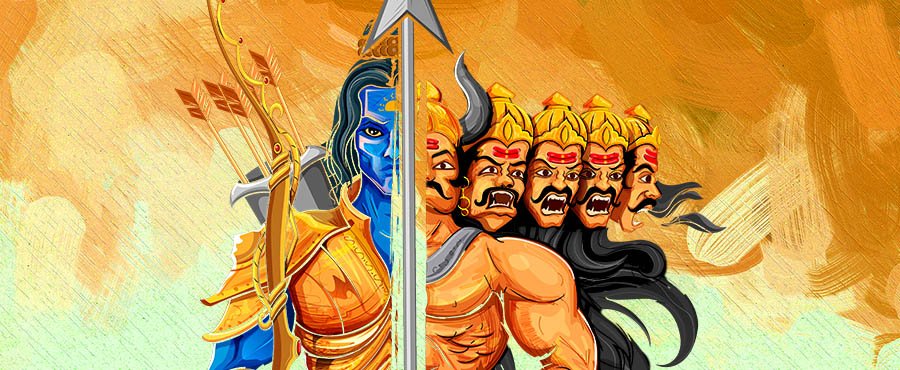
- Ravan was well-aware of his impending doom.
- Ravan was shamed by his own wife, which eventually led to his downfall.
- Ravan and his brother Kumbhkaran were actually avatars of Vishnu’s gatekeepers.
- Ravan performed a yagya for Ram.
- As he lay dying, Ravan imparted valuable knowledge to Lakshman.
- Ravan was Brahma’s great-grandson.
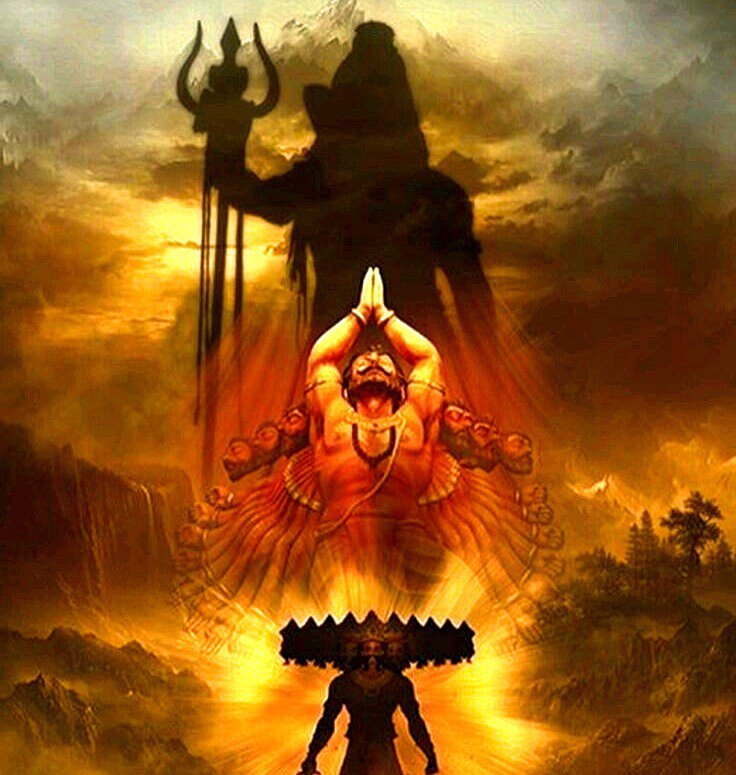
He got the name Ravan later in life, and that too from Shiva.
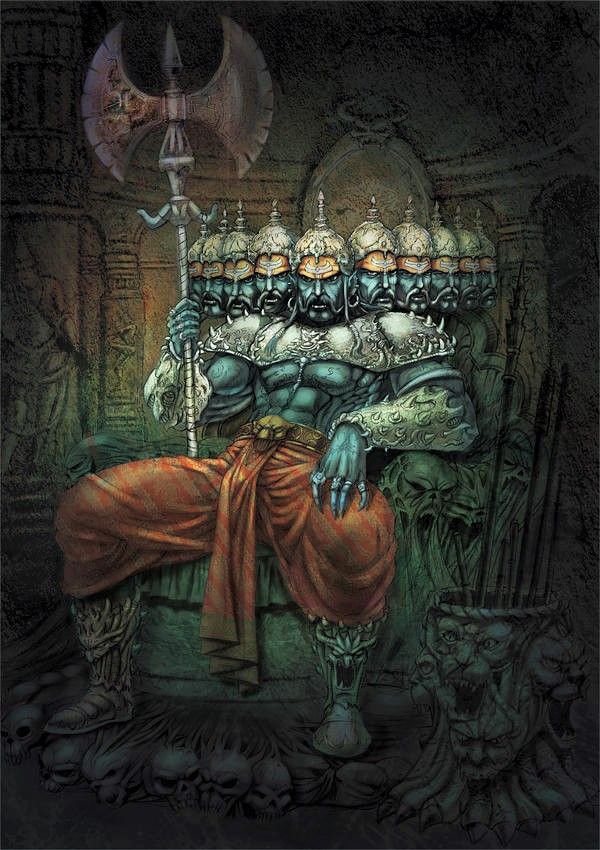
Ravan was so powerful, he could even interfere with planetary alignments.
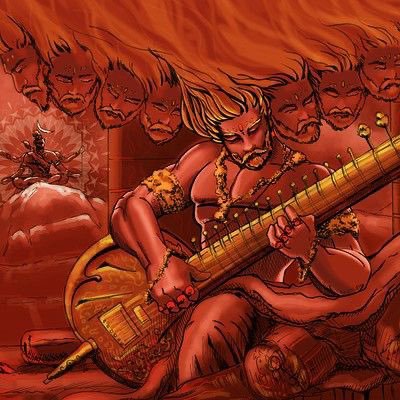
Ravan was an extraordinary veena player.
 EliteExtant
You must be logged in to post a comment.