Sant Dnyaneshwar, also known as Jnaneshwar, was a 13th-century Marathi saint, poet, philosopher, and scholar who played a pivotal role in the Bhakti movement in Maharashtra, India. His life and works continue to inspire millions of people with their profound wisdom, spiritual insight, and literary brilliance. In this blog, we will delve into the life, teachings, and enduring legacy of Sant Dnyaneshwar.
Early Life
Sant Dnyaneshwar was born in 1275 CE in a small village called Apegaon in Maharashtra, India, to a pious Brahmin family. He was the second of four siblings, and his father, Vitthal Pant, was a respected scholar and priest. Dnyaneshwar’s early life was marked by a deep devotion to Lord Vithoba, a form of Lord Krishna, and an insatiable thirst for knowledge.
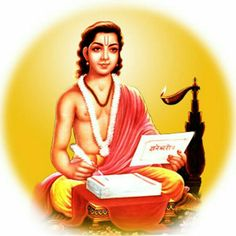
Dnyaneshwar’s Quest for Knowledge
At a young age, Dnyaneshwar displayed extraordinary intellectual abilities. His thirst for knowledge led him to study various scriptures and philosophies, including the Vedas, Upanishads, and the Bhagavad Gita. He soon gained a reputation as a brilliant scholar, even though he was just a teenager.
The Writing of the Dnyaneshwari
One of Sant Dnyaneshwar’s most significant contributions to Marathi literature and spirituality is the “Dnyaneshwari,” a commentary on the Bhagavad Gita. At the age of 16, he began composing this profound work in the Marathi language to make the teachings of the Gita accessible to the common people. The Dnyaneshwari is not only a literary masterpiece but also a spiritual guide that elucidates the principles of devotion, knowledge, and self-realization.
Journey as a Saint
Sant Dnyaneshwar’s life took a significant turn when he decided to take “samadhi,” a yogic practice of consciously leaving one’s physical body. He and his siblings, Nivruttinath, Sopan, and Muktabai, entered a state of deep meditation in a secluded cave. Legend has it that the siblings left their physical bodies in this cave, but their souls continued to live on.
Teachings of Sant Dnyaneshwar
- Bhakti and Devotion: Sant Dnyaneshwar emphasized the path of devotion (bhakti) as the most accessible way to attain spiritual realization. His teachings revolved around deep love and surrender to the divine.
- Self-Realization: He stressed the importance of understanding one’s true nature, which he believed was identical to the divine. This realization, he argued, leads to liberation (moksha).
- Non-Dualism (Advaita): Dnyaneshwar’s teachings were heavily influenced by the Advaita Vedanta philosophy of non-dualism, where the individual self (atman) is ultimately one with the universal consciousness (Brahman).
- Universal Love: He advocated for love and compassion towards all living beings, transcending social and caste barriers.
Legacy
Sant Dnyaneshwar’s legacy endures through his literary works, teachings, and the Warkari movement in Maharashtra. The Warkaris are devotees of Lord Vithoba who follow the path of devotion and undertake an annual pilgrimage to the temple of Pandharpur. Sant Dnyaneshwar’s Dnyaneshwari remains a cornerstone of Marathi literature and spiritual philosophy.
Dnyaneshwar’s teachings have transcended regional boundaries and continue to influence seekers of truth and spirituality not only in India but around the world. His life and works serve as a beacon of light, guiding individuals towards inner peace, self-realization, and devotion to the divine.
Conclusion
Sant Dnyaneshwar, also known as Jnaneshwar, was a luminary of the Bhakti movement whose life and teachings continue to inspire and guide countless individuals on their spiritual journeys. His profound wisdom, devotion to Lord Vithoba, and literary genius have left an indelible mark on the spiritual landscape of India. Sant Dnyaneshwar’s legacy serves as a testament to the enduring power of love, knowledge, and devotion in the pursuit of the divine.
 EliteExtant
You must be logged in to post a comment.