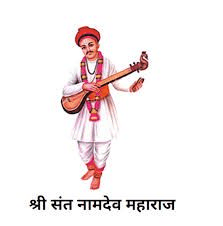
Sant Namdev, often referred to simply as Namdev, was a revered saint and poet-saint who played a significant role in the Bhakti movement in India during the late 13th century. His devotional compositions, known as Abhangaas, have left an indelible mark on the landscape of Indian spirituality and continue to inspire countless individuals to this day. Beyond his spiritual contributions, Sant Namdev was also a social reformer who challenged the prevailing norms of caste discrimination and advocated for the universality of devotion to God.
Early Life and Background
Sant Namdev was born in the village of Narsi Bamani in Maharashtra, India, in the year 1270. He was born into a family of tailors, and from a young age, he showed a deep inclination toward spirituality and devotion to Lord Vithoba, a form of Lord Krishna worshiped in the Pandharpur region of Maharashtra.
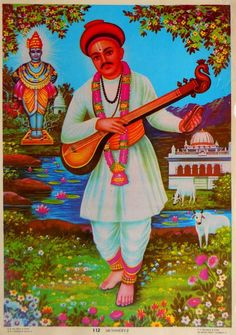
The Bhakti Movement
Sant Namdev lived during a time when India was undergoing significant social and religious changes. The Bhakti movement, which started in South India and later spread to various parts of the country, sought to establish a direct and personal connection with the Divine, transcending the ritualistic and caste-based practices that had become prevalent in Hinduism.
Namdev’s Spiritual Journey
Namdev’s devotion to Lord Vithoba was unwavering, and he often composed devotional songs and hymns in praise of his beloved deity. These compositions, known as Abhangas, became the cornerstone of his spiritual legacy. Namdev’s devotion was not confined to rituals; it was deeply rooted in his heart and expressed through the purity of his soul.
One of the most famous stories associated with Sant Namdev is the episode of the temple entry. Namdev was denied entry into the inner sanctum of the temple in Pandharpur, where he wished to offer his prayers. In an act of unwavering devotion and a powerful statement against discrimination, it is said that Lord Vithoba turned the idol to face Namdev, acknowledging his true devotion. This incident underscores Namdev’s belief in the equality of all souls before God and the rejection of caste-based discrimination.
Social Reformer and Advocate for Equality
Sant Namdev was not only a spiritual luminary but also a social reformer who challenged the oppressive caste system and advocated for social equality. He believed that devotion to God should be accessible to all, regardless of one’s social or economic background. His teachings emphasized the oneness of humanity and the idea that all souls are equal in the eyes of the Divine.
Namdev’s Legacy
Sant Namdev’s legacy is enduring and multifaceted. His devotional hymns continue to be sung by devotees, and his teachings on equality and devotion resonate with people from all walks of life. His contributions to the Bhakti movement are celebrated not only in Maharashtra but throughout India, and his Abhangas are an integral part of the devotional music and poetry tradition.
Conclusion
Sant Namdev’s life and teachings exemplify the essence of the Bhakti movement in India—a movement that emphasized personal devotion, equality, and direct connection with the Divine. His unwavering faith, his ability to challenge social norms, and his poetic expression of devotion have left an indelible mark on Indian spirituality and continue to inspire generations of seekers on their spiritual journeys. Sant Namdev’s life reminds us of the enduring power of love and devotion to transcend barriers and create a more inclusive and compassionate world.
 EliteExtant
You must be logged in to post a comment.