
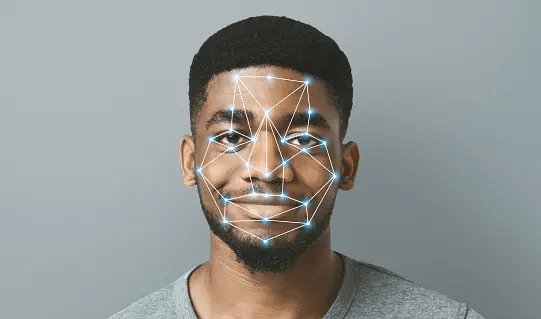
In recent years, computer vision has witnessed remarkable advancements, transforming the way machines perceive and interpret visual information. This interdisciplinary field, at the intersection of computer science and artificial intelligence, focuses on enabling machines to gain a deeper understanding of the visual world. From facial recognition to autonomous vehicles, the applications of computer vision are widespread, and ongoing breakthroughs continue to push the boundaries of what is possible.
- Deep Learning and Neural Networks:
One of the primary drivers of the recent surge in computer vision capabilities is the widespread adoption of deep learning techniques and neural networks. Convolutional Neural Networks (CNNs), in particular, have proven to be exceptionally effective in image recognition tasks. The ability of deep neural networks to automatically learn hierarchical features from data has significantly enhanced the accuracy and efficiency of computer vision systems.

- Object Detection and Recognition:
Advancements in object detection and recognition have been pivotal in various domains, such as surveillance, healthcare, and retail. State-of-the-art algorithms, including Faster R-CNN and YOLO (You Only Look Once), enable real-time object detection with high precision. These technologies play a crucial role in developing smart cities, enhancing security, and streamlining processes in industries like manufacturing and logistics.
- Image Segmentation:
Image segmentation has evolved to provide more nuanced understanding of visual data. Semantic segmentation, which assigns specific labels to each pixel in an image, has applications in medical imaging, autonomous driving, and augmented reality. Instance segmentation further refines this process by distinguishing between individual instances of the same object, allowing for more accurate and detailed analysis.
- 3D Computer Vision:
Advancements in 3D computer vision have unlocked new possibilities in augmented reality, virtual reality, and robotics. Techniques like Structure from Motion (SfM) and Simultaneous Localization and Mapping (SLAM) enable machines to perceive and navigate the three-dimensional world. This is particularly critical for applications like autonomous vehicles, where understanding the depth and structure of the environment is essential for safe and effective operation.
- Transfer Learning and Pre-trained Models:
Transfer learning has emerged as a powerful strategy in computer vision, allowing models trained on large datasets to be fine-tuned for specific tasks with smaller datasets. Pre-trained models, such as those developed for image classification on ImageNet, serve as a foundation for various applications, accelerating the development process and improving overall performance.
- Explainable AI in Computer Vision:
As computer vision systems become more sophisticated, the need for explainability and interpretability has become increasingly important. Researchers are working on developing models that provide clear explanations for their decisions, which is crucial in applications like healthcare and criminal justice, where understanding the reasoning behind a system’s output is essential.
Conclusion:
The rapid advancements in computer vision have not only revolutionized industries but have also opened doors to novel applications and possibilities. From improving the accuracy of facial recognition systems to enabling autonomous vehicles to navigate complex environments, the future of computer vision holds immense promise. As research and development in this field continue, we can anticipate even more sophisticated and versatile visual intelligence systems that will shape the way we interact with technology and perceive the world around us.
 EliteExtant
You must be logged in to post a comment.