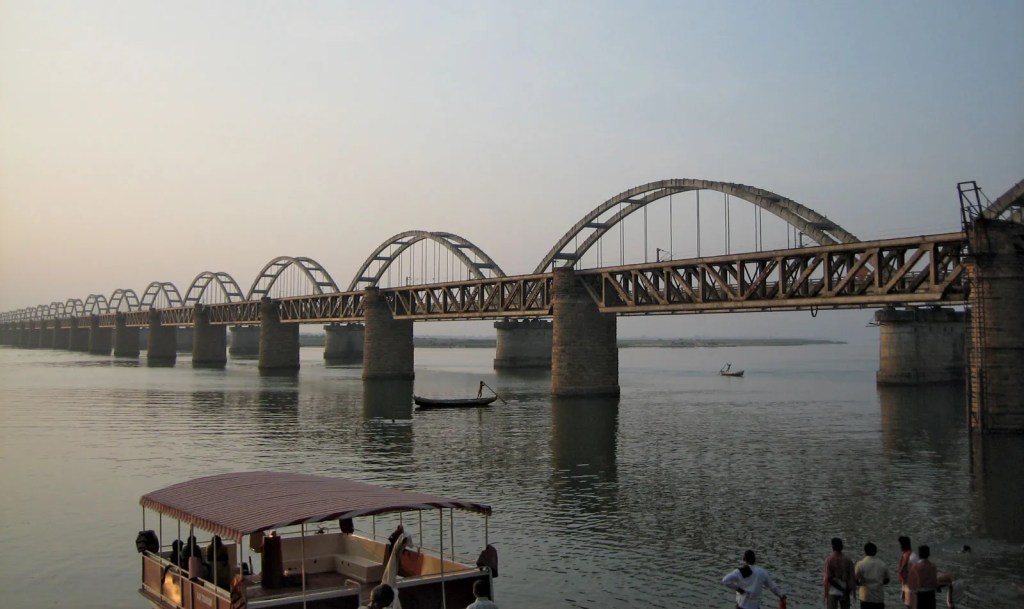
Flowing gracefully through the heartland of India, the Godavari River stands as a testament to the country’s rich geographical and cultural diversity. Often referred to as the Ganges of the South, the Godavari is the second-longest river in India, traversing multiple states and playing a pivotal role in the lives of millions. This article explores the significance, geography, and cultural importance of the Godavari River.
Geography:
Originating in the Trimbak Hills of Maharashtra, the Godavari River meanders for about 1,465 kilometers (910 miles) before emptying into the Bay of Bengal. Its extensive drainage basin covers an area of approximately 312,812 square kilometers, making it one of the largest river basins in the country. The river passes through states such as Maharashtra, Telangana, Chhattisgarh, Madhya Pradesh, Odisha, and Andhra Pradesh, influencing the socio-economic and cultural fabric of each region.
Cultural Significance:
The Godavari holds immense cultural and religious importance in the Indian subcontinent. Numerous mythological stories and ancient texts mention the river, elevating its status to that of a sacred entity. It is often associated with the epic Ramayana and is believed to be the river on whose banks Lord Rama spent a significant part of his exile. Pilgrims flock to its ghats to perform religious rituals and ceremonies, particularly during the Pushkaram festival, which occurs every 12 years at specific riverbanks.
Economic Importance:
Beyond its cultural and religious significance, the Godavari River plays a crucial role in the agricultural and economic activities of the regions it flows through. The fertile plains along its banks support diverse crops, including rice, sugarcane, and cotton. The river’s water is harnessed for irrigation through an extensive network of canals and dams, such as the Sriram Sagar Project and the Polavaram Dam. These water management systems contribute significantly to the agricultural prosperity of the surrounding areas.
Biodiversity and Conservation:
The Godavari River basin is known for its rich biodiversity, with diverse flora and fauna thriving in and around its waters. The river sustains a variety of aquatic life, including several species of fish and freshwater turtles. The region is also a habitat for migratory birds, enhancing its ecological importance. However, rapid urbanization, industrialization, and pollution pose threats to the river’s ecosystem. Conservation efforts are underway to address these challenges and ensure the sustainable management of this vital water resource.
| Advantages of the Godavari River | Problems Faced by the Godavari River |
|---|---|
| 1. Agricultural Prosperity: The river’s water is crucial for irrigation, supporting the cultivation of crops like rice, sugarcane, and cotton. | 1. Pollution: Industrial discharge, agricultural runoff, and untreated sewage contribute to water pollution, affecting the river’s ecosystem and the health of communities relying on it. |
| 2. Economic Contributions: The fertile plains along the Godavari support a thriving agricultural sector, contributing significantly to the economy of the regions it traverses. | 2. Deforestation: Uncontrolled deforestation in the river’s catchment areas can lead to soil erosion, sedimentation of the river, and a loss of biodiversity. |
| 3. Cultural and Religious Significance: The Godavari is deeply ingrained in the cultural and religious practices of the region, attracting pilgrims and fostering a sense of community. | 3. Water Scarcity: Despite its length, the Godavari faces challenges related to water scarcity in certain regions, impacting both agriculture and daily life. |
| 4. Biodiversity: The river basin is home to diverse flora and fauna, supporting aquatic life and providing a habitat for migratory birds. | 4. Dams and Altered Flow: The construction of dams and reservoirs for water management can alter the natural flow of the river, affecting ecosystems and disrupting fish migration patterns. |
| 5. Water Management: The Godavari facilitates water management through projects like dams and canals, aiding in flood control and ensuring a stable water supply. | 5. Climate Change Impact: Changes in rainfall patterns, temperature, and extreme weather events due to climate change pose risks to the river’s ecosystem and the communities it sustains. |
| 6. Hydroelectric Power: Dams on the Godavari generate hydroelectric power, contributing to the region’s energy needs. | 6. Encroachment and Urbanization: Urban expansion and encroachment along the riverbanks can lead to habitat loss, increased runoff, and degradation of water quality. |
Conclusion:
The Godavari River, with its scenic landscapes, cultural significance, and economic importance, stands as a symbol of India’s natural and cultural heritage. As the river continues to flow through the heart of the country, it remains an integral part of the lives of millions of people, connecting diverse communities and fostering a shared sense of identity. Preserving and sustaining the Godavari’s health is not just a matter of environmental concern but is essential for the well-being of the people and ecosystems that depend on its waters.
 EliteExtant